The sweater promised 100% cashmere. The receipt said 29.9% APR.
Both felt soft at first.
I bought it because it was an ‘investment.’ I liked the language of that—its seriousness, its implied foresight. The word made the purchase sound less like desire and more like planning. I was not indulging myself; I was allocating capital. The sweater was neutral, camel-coloured, described online as timeless. It was something I would ‘have for years.’ The first instalment was small enough to seem decorative. The second arrived with interest. The third arrived with a tone I can only describe as autocratic.
By then the sweater had begun to pill.
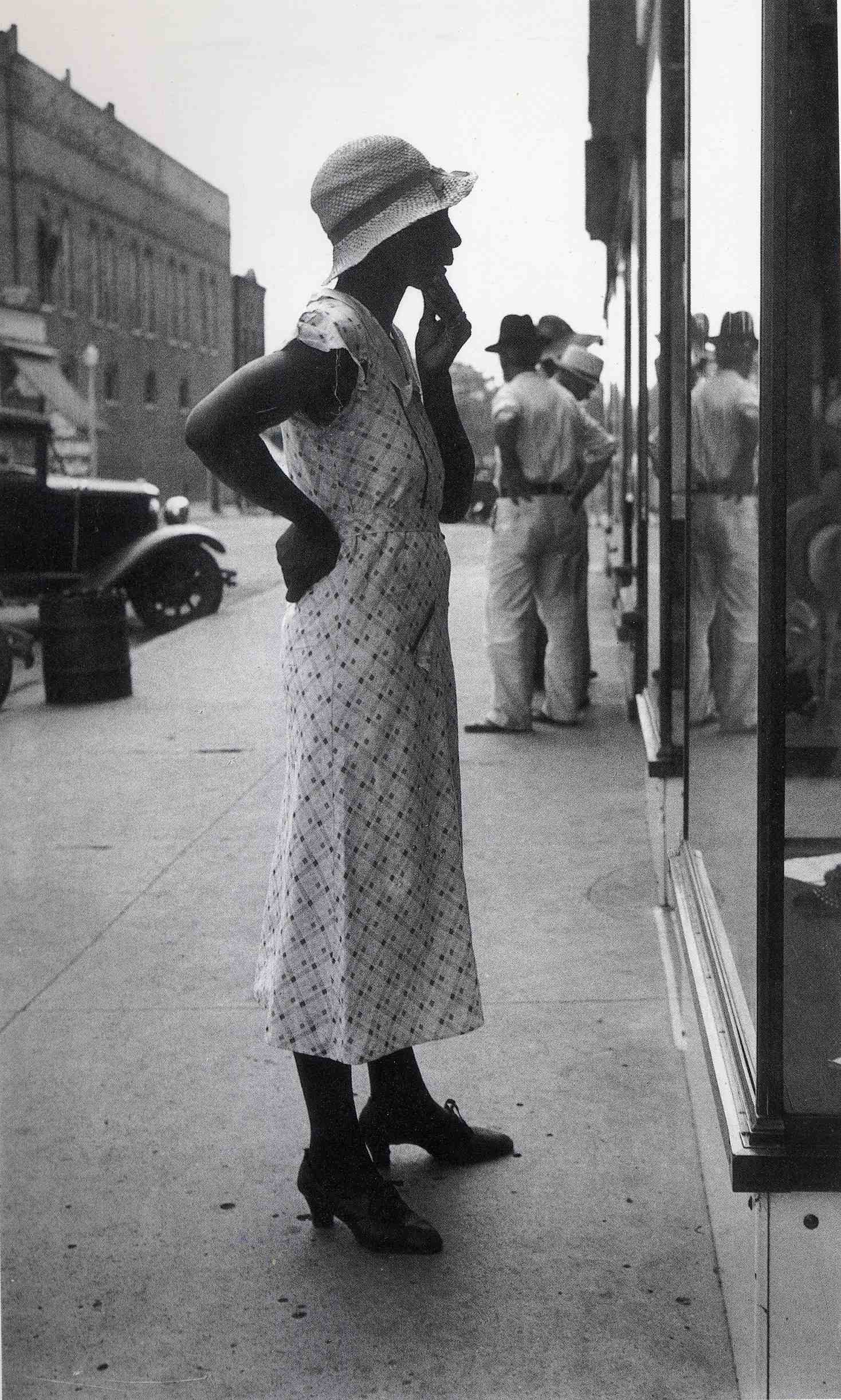
The practice is not new. Department stores offered layaway from the 1930s; catalogue credit built the suburban wardrobe for decades.1 What changed, in the mid-2010s, was not the concept but the interface. Klarna, founded in Stockholm in 2005, and Afterpay, launched in Australia in 2014, did not invent instalment credit, they engineered its disappearance. The word ‘loan’ never appeared in their marketing. Neither did ‘interest,’ unless you scrolled far enough, and by then, your interest was already piqued in other ways. The timing was not accidental. After the 2008 financial crisis, traditional credit became both harder to obtain and harder to trust. A generation that had watched their parents lose homes and drown in credit card debt approached conventional borrowing with something close to phobia. The smartphone made seamless checkout possible; post-crash wariness of credit cards made it necessary; and the rise of fast fashion had already trained consumers to expect newness at low price points constantly.
I had always assumed that ownership occurred at the point of sale. But the email reminders suggested otherwise. Payment due. Amount outstanding. Minimum required. The sweater hung in my wardrobe as though it were mine, yet the language surrounding it implied a different arrangement. Ownership, I began to suspect, was less about possession than about compliance.
In the store, the card machine hesitated. There is always a pause — a small mechanical silence in which the garment is neither yours nor not yours in a state of processing until it is approved. The word flashes briefly, and with it a sense of recognition. You are authorised. The sweater crosses the counter. The bag is handed over. The moment feels complete. But the approval is provisional. It does not mean paid. It means permitted. On a standard Klarna plan, the APR, or the Annual Percentage Rate, meaning the true yearly cost of borrowing can reach as high as 29.9%. On Afterpay, miss a payment and a late fee follows within days. The terms are rarely read. They exist as a scroll of language, a box to be ticked, a hyperlink left unopened. And yet they structure the entire exchange. They determine when title transfers, what constitutes default, how interest accrues, when penalties apply. They specify jurisdiction. They outline remedies. They make clear that failure to comply may result in further action. The sweater, in other words, is not simply purchased. It is governed.
Fashion has grown fluent in the language of law and capital. We are advised to seek ‘investment pieces,’ to calculate ‘cost per wear,’ to build ‘capsule wardrobes’ that promise longevity and return. A blazer is no longer flattering, it is an essential part of building a capsule wardrobe. A Birkin is not a beautiful testament to popular culture and history; it is an investment product or an ‘I’ll give it to my daughter one day’ token. Even denim, once the emblem of casualness, is now assessed in terms of durability, yield, and life cycle.
‘Cost per wear’ is perhaps the most revealing phrase. It implies duration, division, a contractual spreading of an expense across time. It presumes discipline. The garment must be worn enough times to justify its acquisition, otherwise it fails its own logic. The responsibility rests not with the cloth but with the wearer. You must perform your wardrobe into profitability. A dress worn only once becomes a bad decision. A coat left in the back of the closet accrues guilt. The language of waste enters quietly. You should have known better. The phrase itself migrated from personal finance blogs into fashion media, carried by the same wave of ‘conscious consumption’ rhetoric that made spending feel like a moral practice rather than an economic one.2
Ownership is not a feeling. It is a status recognised by institutions. It depends on proof of purchase, on transfer of title, on compliance with conditions. If the charge is reversed, the garment may be reclaimed. If fraud is alleged, the transaction can be voided. If payment is not made, the object becomes subject to claim.
Before one is allowed to manage, one must qualify. There is a peculiar intimacy to being told you are eligible. Pre-approved. Member access. Exclusive tier. The notification arrives with the warmth of recognition. Eligibility is a status that extends beyond clothing, but fashion makes it visible. To qualify for a line of credit is to be momentarily affirmed. Your score is sufficient. Your history acceptable. The invitation to purchase in instalments carries an undercurrent of trust, though the trust has been formalised, quantified, secured. Credit is often described as freedom. Klarna’s early campaigns were pastel-toned and influencer-heavy, promising ‘smoooth’ shopping — the extra o’s doing work to make debt feel soft. Afterpay told customers they were ‘always in control.’ Both companies targeted millennials and Gen Z women, demographics that market research described as underserved by traditional credit meaning. They might lack access to traditional credit cards but possessed both the desire and the social pressure to dress well.3 Retail language is saturated with this quiet legalism: Returns accepted within fourteen days. Item must be unworn, tags attached. Proof of purchase required. These are not suggestions; they are terms. They delineate rights and obligations. The garment arrives already embedded in a framework of eligibility and limitation. In Confessions of a Shopaholic, the 2009 film, the debt collector appears at parties, at work, on television — everywhere the protagonist goes to perform her life. The law, in other words, was always present. It had simply learned to wait.
To swipe a card is to enter a contract. The contract does not merely facilitate payment; it structures time. By tapping ‘Pay in Four,’ the phrase Klarna uses, echoed by Afterpay, Affirm, and their competitors, all of whom entered the fashion checkout in earnest during the early 2020s, you assent to a schedule. The schedule is enforceable. The enforceability is what gives the credit its reality. Without the possibility of consequence, the promise would be sentimental. With consequence, it becomes capital. Credit is not simply money advanced. It is an enforceable promise. It exists because a failure to pay produces more than embarrassment. It produces record of standing, and this determines access. This is not a new arrangement. People have been buying things they couldn’t fully afford upfront for over a century. Singer sewing machines were sold on instalment plans in the 1850s, under the slogan ‘dollar down, dollar a week,’ signifying, essentially, consumer credit, before the term existed.4 Hire purchase agreements, where you pay a little each week and only truly own the object once the final payment clears, built much of the postwar wardrobe. What Klarna and its competitors changed was not the concept but the feeling. There is no paperwork, no moment where you consciously register taking on debt. You tap your phone. The obligation is invisible until it isn’t.
I once bought a blazer for a job interview using a buy-now-pay-later plan. Four instalments. No interest if paid on time. The blazer was navy, structured, intended to signal competence. It was less clothing than argument: I am employable. I wore it to the interview. I found out I did not get the job before I had even reached the third instalment. By the time the final instalment came due, the interview was a memory. The blazer remained, hanging with the other garments, indistinguishable from them. The obligation did not care about the outcome it had been meant to secure. It simply arrived, punctual, exact.
While the reminder always arrives without flair, it contains an implicit structure of enforcement. Failure to comply will result in late fees. Continued failure may be reported. Reporting alters your standing. Standing determines eligibility. Eligibility determines access — to housing, to further credit, to the next purchase. It is strange that a garment can enter your credit history. Stranger still that it can remain there. We are accustomed to thinking of debt as something attached to rent or tuition — large, immovable obligations that structure adulthood. But fashion participates in the same architecture, only in miniature. The consequences are smaller, yet similar in form. Failure to pay is not merely a lapse; it is actionable. The word itself carries weight. It implies enforceability, the possibility of escalation. The softness of the sweater is supported by a harder infrastructure.
The credit score is perhaps the most abstract mirror. It is a number that reflects your past behaviour and predicts your future trustworthiness. One checks it with a mixture of curiosity and apprehension, not unlike checking one’s reflection before leaving the house. There is pride in improvement, shame in decline. But unlike the mirror, the score does not respond to contour or lighting. It responds to patterns — utilisation rate, payment history, length of credit. You can reduce your visible debt and still appear stylish. It is possible for your fashion reflection to rise while your financial reflection falls. The paradox is precise: the very act of refreshing a wardrobe — of increasing one’s aesthetic credibility — can destabilise the numerical index that determines access to rent, loans, mortgages. Spend too much of your available credit, and the number drops. Improve the exterior, diminish the score.
Failure to pay a relatively minor consumer debt can migrate outward. It can be sold to a collection agency. It can generate notices. It can, in certain circumstances, lead to legal action. Consumer courts process thousands of such claims daily. What began as fabric becomes file. What began as softness becomes docket number. The sweater is not worth litigating in itself. But the structure that made it possible is worth defending. The legal architecture does not care about the garment’s aesthetic merit. It cares about the enforceability of agreement.
Fashion capital is not merely accumulation of (designer) pieces. It is the accumulation of cotton and cashmere in a stabilised system of law. Value does not persist because it is felt. It persists because it is recognised, recorded, and protected. A receipt establishes proof. A contract defines obligation. The APR transforms time into quantifiable cost. The enforceable nature of the agreement is what renders the transaction meaningful beyond sentiment. Under these conditions, worth begins to feel continuously recalculated. It is not something possessed but something monitored. Credit bureaus update monthly. Trends update seasonally. Scores fluctuate. Hemlines shift. A good standing in one register does not guarantee stability in another. To remain fashionable requires vigilance. To remain solvent requires vigilance. Both demand attention. Both punish neglect.
You can look impeccable and be in default. You can appear disheveled and remain in good standing. These registers do not align neatly, yet they intersect. Increase your credit utilisation to improve your aesthetic standing, and your numerical standing declines.
The score updates regularly. It recalculates. It adjusts. It is never final. Worth, in this register, is not declared once but monitored. To remain in good standing requires vigilance. The rating is not moral in tone, but it produces moral effects. A low score feels like failure. A missed payment feels like negligence. In the UK, buy-now-pay-later debt was largely unregulated until 2023, meaning missed payments accrued without appearing on credit files, a protection that also meant borrowers had no idea how much they owed across multiple providers. Regulation, when it came, was framed as consumer protection. It was also, for the industry, a form of legitimisation.
Clothing is rarely discussed as contract, yet it often behaves as one. The care label prescribes proper treatment. The receipt specifies return policies. The credit agreement dictates payment schedule. Each garment arrives with instructions and contingencies. Do not bleach. Do not tumble dry. Do not default.
While the sweater thins at the elbows. Its fibres loosen. It reveals its material limits. Debt, by contrast, thickens. Interest compounds in abstraction. The garment decays physically; the obligation accrues symbolically. One becomes lighter, the other heavier.
Time moves asymmetrically. Fashion seasons are brief; credit terms extend. A dress may feel obsolete within months; the instalment plan remains. The contract outlives desire. What was once charged with anticipation becomes routine deduction.
Fashion operates similarly. A dress bought for a relationship may still be paid for after the relationship ends. The garment remains materially present; the context evaporates. The instalments detach from their justification. What was once charged with narrative becomes administrative. The average fashion item is worn seven times before being discarded. The average Buy-Now-Pay-Later repayment period is six weeks. The garment and the debt run almost exactly parallel, except one of them can be thrown away.
Under these conditions, value appears less like a property of objects and more like a status maintained through adherence. To be ‘in good standing’ is to have satisfied obligations. It is not a permanent state but a continuously renewed one. Each purchase enters a ledger beyond the closet. Perhaps this is why ‘investment dressing’ feels persuasive. It promises that garments can function as assets rather than liabilities. But assets, too, exist within legal frameworks. Their value depends on recognition. Without law, the sweater would simply be expensive. With law, it becomes temporal, conditional, structured. The care label reads: hand wash cold. Lay flat to dry. Do not wring. The credit agreement reads differently, but the logic is similar: maintain minimum balance. Avoid excess. Remain in good standing. The language differs in texture, not in structure. Both are systems of instruction designed to preserve value.
Somewhere between the lining and the ledger, between the care label and the credit report, we learn that value persists because it can be enforced. And in learning this, we begin to treat ourselves as though we too are subject to legal terms — adjusting, complying, recalculating — so that what we wear, and what we owe, remain in order. The sweater hangs in the back of the closet now, a distant reminder of an event that has long passed. The balance was eventually paid. The notifications ceased. The contract concluded. If the cashmere was, in the end, only polyester, nothing in the ledger would change.
Renée Robinson is a lawyer turned doctoral researcher analysing international law in the fashion industry. She teaches International Law, Fashion Law, and Feminist Legal Theory at Sciences Po, Paris.
Layaway became common during the Great Depression of the 1930s, though instalment-style payment plans for clothing appear in advertisements as early as 1909. “Layaway — Not the Modern Concept We All Think It Is,” 6 July 2022, https://blacksheepantiques.co.uk/blogs/vintage-fashion-history-and-labels/the-history-of-layaway. ↩
The precise origin of the phrase “cost per wear” is difficult to source. Its widespread adoption in fashion media coincided with the growth of sustainable fashion discourse in the 2010s. For representative usage and analysis, see: Isabel Slone, “Is Cost-Per-Wear as Useful as We Think?” Freak Palace, 14 April 2024, https://freakpalace.substack.com/p/why-cost-per-wear-is-flawed. ↩
On BNPL marketing to younger demographics and the post-2008 credit wariness that shaped their uptake, see: “Boom in ‘Buy Now, Pay Later’ Plans Sparks Concerns Over Consumer Risks,” La Loyolan, 18 December 2023, https://www.laloyolan.com/news/boom-in-buy-now-pay-later-plans-sparks-concerns-over-consumer-risks; “Gen Z’s BNPL Boom,” Prosperity Issue, 1 September 2025, https://prosperityissue.com/gen-zs-bnpl-boom-why-buy-now-pay-later-is-the-new-credit-card-nightmare-in-2025. ↩
On Singer’s instalment plan and its role in the history of consumer credit: Harvard Business School, “Easy Payments: The Rise of Instalment Selling,” https://www.library.hbs.edu/hc/credit/credit4b.html; Singer’s “dollar down, dollar a week” plan is widely cited as the first mass-market consumer instalment scheme in the United States ↩